Posts

Conditioner Bars

Image
Conditioner Bars⭐ Recently, I have targeted my bathroom routine for reducing waste. This has included using bar shampoo, conditioner and body wash. In principle, all very similar products, however I found that they have all performed very differently. While I loved shampoo bars, and would recommend everyone tries them (see my last blog post), I cannot say the same for conditioner bars. Why Try This Alternative? As I have long hair, I can get through a lot of conditioner. I had seen conditioner bars and thought it would be a good way to cut another plastic bottle from my daily routine. Often the plastic bottles for liquid conditioner are hard to recycle, especially those using colourful plastics. My Swap So far I have tried two conditioner bars: 'Hey Mango' by Non Plastic Beach for £7.95 (50g, £15.90/100g) 'The Golden Cap' by Lush for £9 (65g, £13.85/100g) When using liquid conditioner, I was spending about £1.65 per 100ml. Therefore, to make conditioner bars financially...

Shampoo Bars

Image
Shampoo Bars ⭐⭐⭐⭐⭐ Having tried and been completely converted to bar hand wash, I was curious whether other products would be as effective in solid form. This has included bar shampoo, conditioner and body wash. If hand wash was such an good alternative, could shampoo be the same? Why try this alternative? As an essential product, and with long hair, I get through a lot of shampoo, and consequently a lot of plastic bottles, many unrecyclable. Therefore, bar shampoo presents a good way of decreasing my plastic consumption. Additionally, all the shampoo bars I tried so far are vegan and cruelty free. My swap I have been using bar shampoo (and conditioner) for over six months now, and so far I have tried three different bars: "Hey mango" Shampoo bar by Non Plastic Beach for £9.50 (70g, £13.60/100g) "Jason and the Argon Oil" by Lush for £8 (55g, £14.50/100g) Eco Warrior Shampoo Bar for £4.50. (£4.50/100g) When I was using liquid shampoo it was costing about 30p/100ml. T...

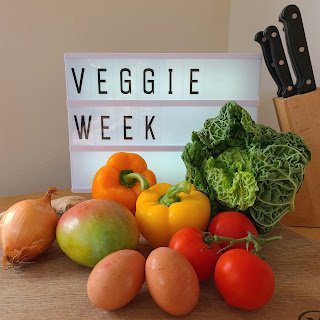
Veggie Week

Image
Vegetarian week: This is the first of my week long challenges. Although vegetarianism is becoming more common, and for many this challenge is the norm; giving up meat is still a big step for a lot of people. I have been cutting back my meat intake for a while now, especially of beef, so becoming vegetarian doesn't seem as big of a leap for me as it once was. This week I wanted to look especially at the quality of  meat alternatives and the difference in cost per meal. Monday: Mushroom Risotto Monday morning started in a pretty boring manner; a bowl of cereal, not changing my routine at all. For lunch I did struggle more than expected. Where I would normally have a quick but uninspiring sandwich, most options I would usually go for were not vegetarian. Instead I went for jacket potato with baked beans and cheese. This cost about 60p while a ham and cheese sandwich would cost about 63p. For the first dinner of the week I made a mushroom risotto with peppers and onion, served with gar...

Bamboo Toilet Paper

Image
 Bamboo Toilet Paper: ⭐⭐⭐⭐ Why is this swap necessary? Almost all toilet roll is made out of 100% virgin trees. The removal of trees not only means they can't take in carbon dioxide, but also released the carbon dioxide currently stored. It isn't as simple as planting new trees; not only do they take over 30 years to fully grow, but the damage caused by clearing forests makes the soil worse to grow on. This is the same issue that arises when forests are cut down for animal grazing. Additionally, the process of making trees into soft tissue takes a lot of energy. Bamboo on the other hand is the worlds fastest growing plant, growing up to 3 foot in one day. It takes in 35% more Carbon Dioxide, and produces 30% more oxygen than trees. Because of the fast growth rate, there is a large surplus of bamboo. The Cheeky Panda (the company that I bought the toilet roll from) turns the excess into toilet roll, saving it from otherwise being discarded. There are 10 different types of bamboo...

Smol Dishwasher Tablets

Image
Smol Dishwasher Tablets: ⭐⭐⭐⭐ About Smol: Smol was set up to provide eco friendly cleaning products which are delivered straight to you. They provide (most products) in plastic free, recyclable packaging, which is the main reason I trialled these. The dishwashing tablets are all-in-one so that you shouldn't need to buy salt or rinse-aid. Additionally, all their products are cruelty free and come with a child-lock mechanism.  Setting up your orders is really easy. They ask you how many times you run the dishwasher a week, and from that calculate how often to send you your delivery. And you don't even have to pay for postage! My Swap: This is how my last two types of dishwashing tablets compare to Smol's in price and packaging: The first came in 25g of recyclable plastic, using about 125g of plastic a year. They cost £15 for 81 tablets, 19p per tablet. The second came in 140g of plastic packaging, with no instructions on recycling. This totals about 500g of plastic a year. Th...

Quick Fix: Bar Hand Soap

Image
Bar Hand Soap: ⭐⭐⭐⭐⭐ This is the first of my quick fix reviews. These are all 5-star alternatives that are easy to incorporate into everyday life. Bar soap is a product that already features in lots of homes, and for good reason! Although there may not be lots to say about the humble hand soap, there is a lot to say for the affects that switching to bar soap has. Why is this swap necessary? This product that removes much unnecessary packaging. Bar soap makes bottles used for liquid soap redundant, as pointless as plastic bags for bananas. It was estimated that 577 million soap containers entered the environment last year. [1]  This is all avoidable plastic packaging which is easily replaced by the cardboard boxes or paper wraps that bar soap comes in. The liquid hand soap that I used before was roughly 55g of mostly unrecyclable plastic. That is about 2.5kg of plastic my house saves a year by switching to bars. This multiplied across the whole population makes a massive differe...

Reusable Period Pads

Image
Reusable Period Pads: ⭐⭐⭐⭐ / ⭐⭐⭐ Why is this swap necessary? The average woman over her lifetime will use 11,000 tampons. These plastic applicators are equivalent to 5,500 plastic bags, and period pads use just as much plastic as the applicators. 90% of period pads are plastic, and given that 50% of the population will have a period for the majority of their lives this represents a vast, vast amount. Based on women making up half of the UK’s population (34,084,000 women), this is 187,462,000,000 plastic bags. Considering most of us are refusing to buy plastic bags anymore, this is a crazy amount. Luckily, there are more and more alternatives appearing in the market. From reusable period pads to menstrual cups, reusable pants to applicator free tampons… the list goes on. I was initially a bit sceptical about reusable period products. They should be reliable and comfortable, and a lot of people I talk to share some of these doubts. As someone said to me, “If there is one place you ...